Materials4 min read
PLA vs PETG: Which Plastic Should Your Part Be Printed In?
PLA vs PETG compared: strength, toughness, heat, moisture, outdoor use and finish, plus a quick picker. Why PETG is our everyday plastic in Melbourne.
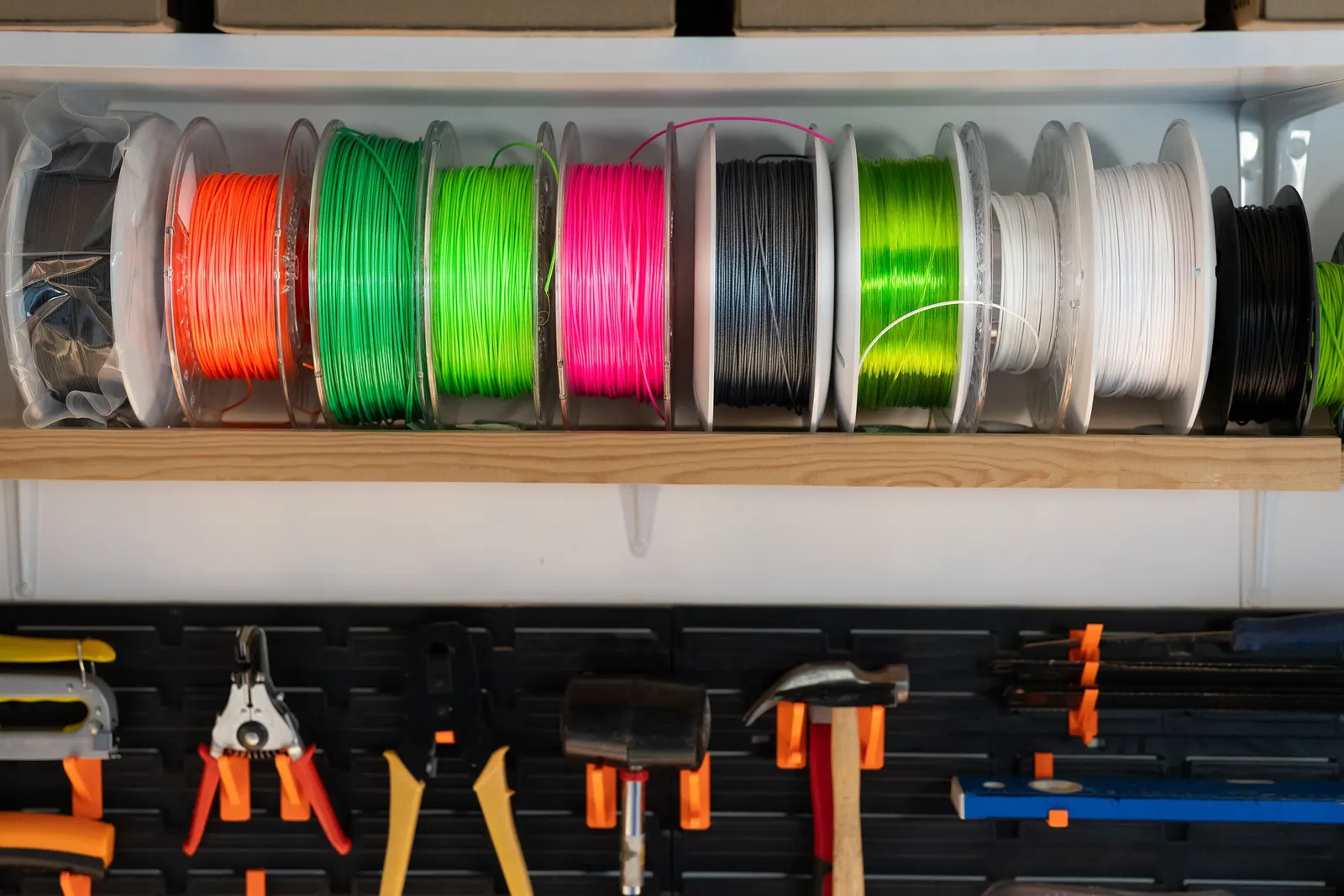
PLA and PETG are the two most common 3D printing plastics, and they look almost identical on the spool. Once printed, they behave very differently. PLA is stiff, crisp and easy, and great for prototypes and models. PETG is tougher, handles more heat and does not mind getting wet, which makes it our everyday workhorse for practical parts. If you are weighing up PLA vs PETG for a part, this guide covers the differences that matter and how we choose at our Melbourne studio.
What PETG is
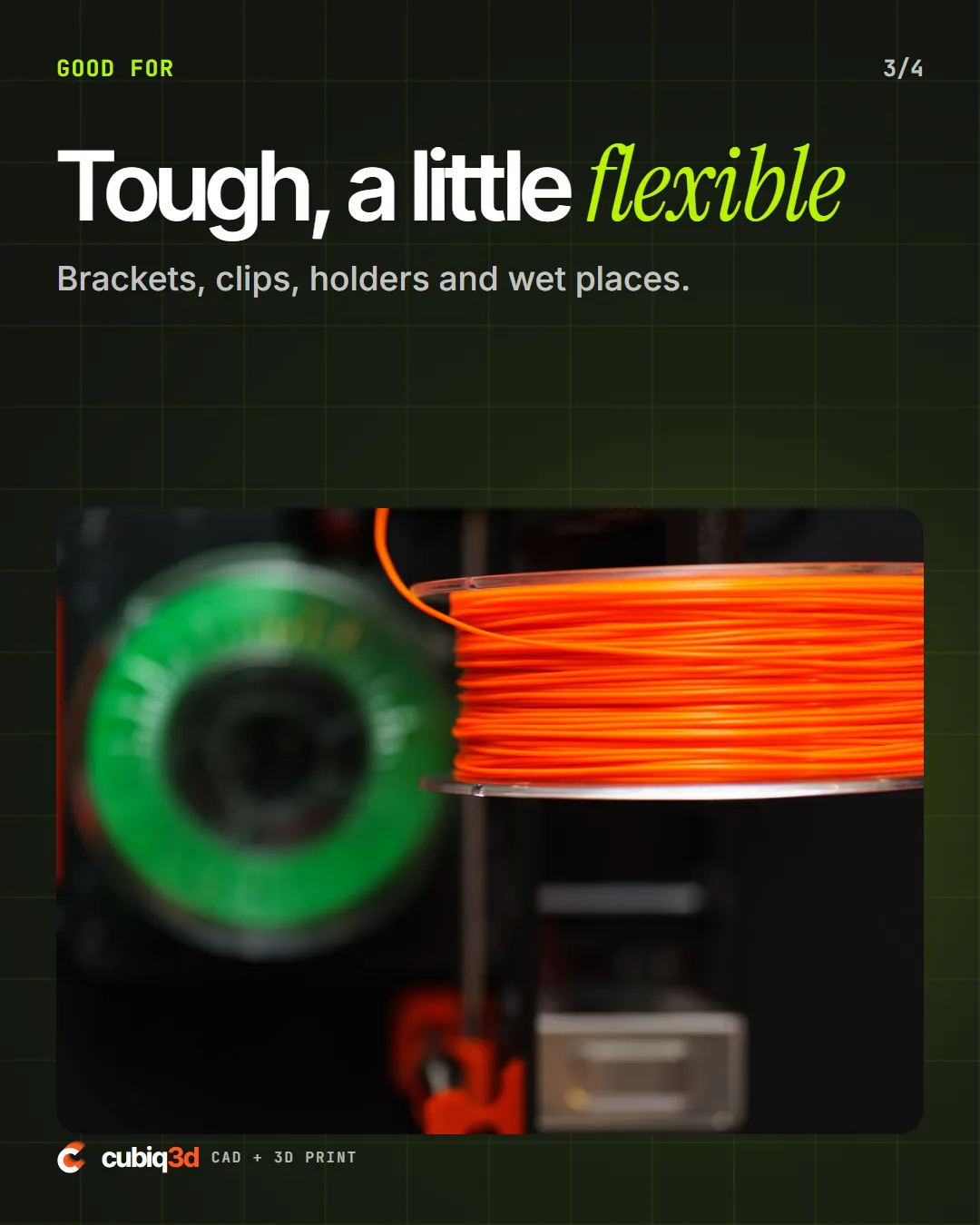
PETG is a version of PET, the plastic used for drink bottles, with glycol added so it prints without going cloudy and brittle. It keeps much of what makes bottles useful: it is tough, a little flexible, shrugs off water and handles knocks. It prints at a higher temperature than PLA and bonds its layers well, so functional parts come out strong.
PLA vs PETG at a glance
| PLA | PETG | |
|---|---|---|
| Stiffness | High, very rigid | Medium, slight flex |
| Toughness | Low; can snap suddenly | High; bends before breaking |
| Softens around | 55–60 °C | ~80 °C |
| Hot car | No | Inside, out of direct sun |
| Water and moisture | OK for splashes | Good; suits wet places |
| Outdoors | No | Shaded or short-term |
| Surface | Crisp, sharp detail | Slightly glossy; detail a little softer |
| Clips and snap-fits | Can crack | Flexes and recovers well |
| Best for | Prototypes, models, display pieces, indoor parts | Brackets, clips, holders, enclosures, practical parts |
Strength: stiff is not the same as tough
PLA often tests stiffer than PETG, which surprises people who expect PETG to be the strong one. The catch is how each fails. PLA holds its shape right up until it snaps, with little warning. PETG flexes a little under load and bends before it breaks. For a part that gets knocked, clipped, squeezed or dropped, toughness matters more than stiffness, and PETG wins. For a part that must not flex at all and lives somewhere cool, PLA can be the better fit.
Heat: the big practical difference
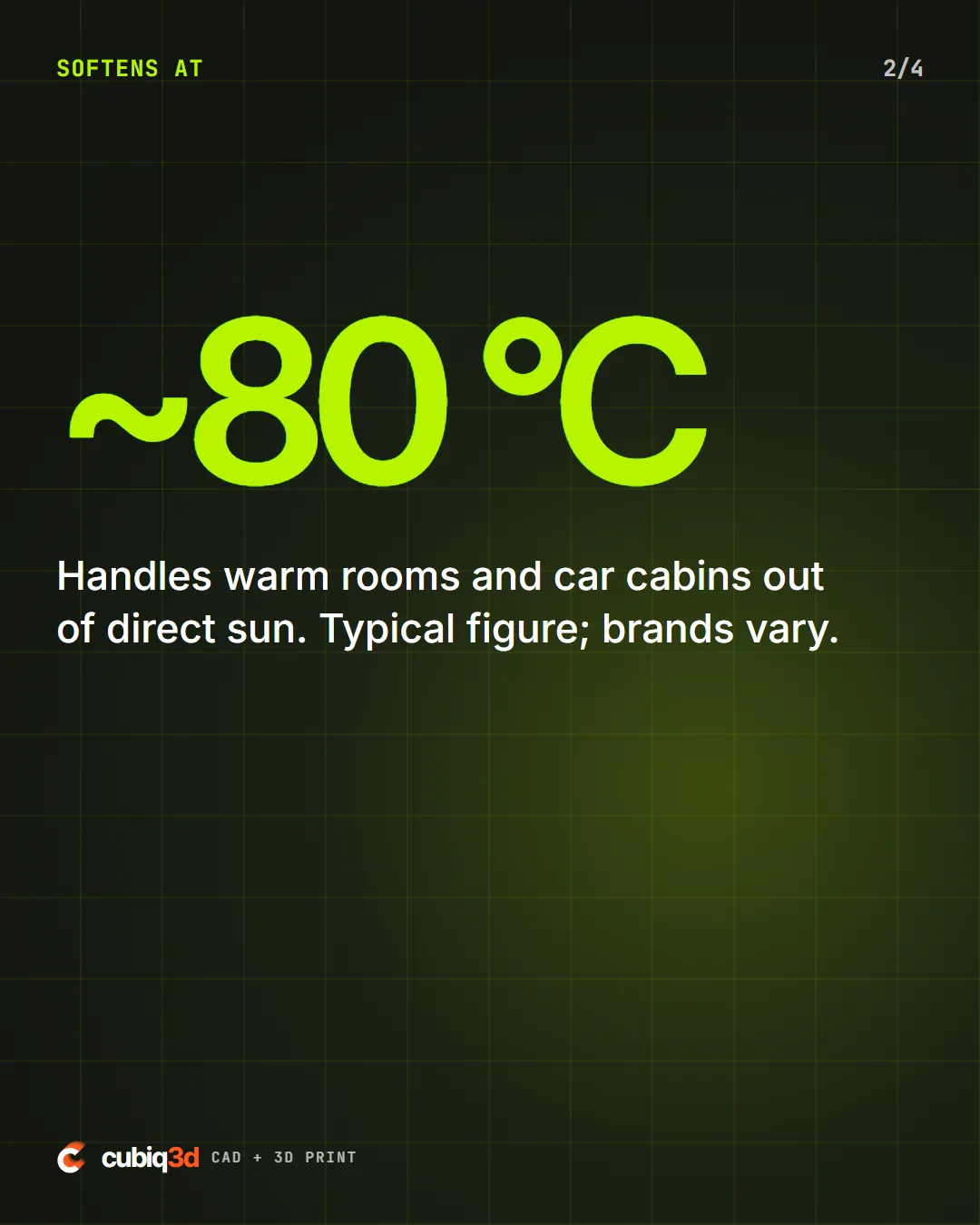
PLA starts to soften at around 55–60 °C. That sounds hot, but a car dashboard in summer, a windowsill in direct sun, or a spot next to an appliance can reach it. Under load, a softened PLA part slowly bends and stays bent. PETG holds out to around 80 °C, which covers most indoor places and car cabins out of direct sun. For parts on a dashboard or near real heat, we step up to ABS. Our hot car guide has the numbers.
When PLA is the better choice
- Prototypes and fit checks, where crisp detail and quick printing help and the part is not the final one.
- Display models and presentation pieces that stay indoors.
- Stiff indoor parts that do not flex, get knocked or get warm.
- Parts where sharp edges and fine detail matter more than toughness.
When PETG is the better choice
- Brackets, mounts and hooks that carry load.
- Clips, latches and snap-fits that flex.
- Bathroom, laundry, kitchen and garden parts that get wet (away from direct food contact).
- Car interior parts out of direct sun.
- Anything that might be dropped, knocked or stepped on.
Finish, detail and colour
PLA prints with crisp edges and sharp detail, and comes in the widest range of colours and finishes, including matte and silk. PETG has a slightly glossy surface and tends to string a little between features, so very fine detail comes out a touch softer. For a display piece or a model where looks come first, PLA usually wins. For a practical part where nobody will inspect the corners, the difference rarely matters.
Designing for each plastic
The plastic changes the design, not just the print. In PLA we keep clip arms short of their limit and thicken thin tabs, because it does not forgive over-bending. In PETG we can design snap-fits and flexing features with more confidence, but we allow a little more clearance on tight fits because it prints slightly less crisply. Either way, we decide the plastic before we draw the part. When you ask for a quote, tell us where the part lives and what it does, and we will choose.
PLA or PETG: quick picker
Quick question
What is your part for?
We print PLA, PETG, ABS, TPU and resin on our 3D printing service. The materials guide compares them all in one place.
Questions people ask
Is PETG stronger than PLA?
PETG is tougher: it bends before it breaks and handles knocks better. PLA is stiffer but more brittle. For most practical parts, PETG is the better choice.
Is PETG heat resistant?
More than PLA. PETG typically softens at around 80 °C, compared with 55–60 °C for PLA. For hotter places, ABS is better.
Is PETG waterproof?
PETG handles water and humidity well, which makes it good for wet places. Whether a printed part is watertight also depends on its design and walls.
Can PETG go outside?
In shade or for a season or two, yes. In full sun all year, it can fade and weaken over time. ASA is made for the outdoors.