Car parts3 min read
3D Scanning Car Parts in Melbourne: Scan, Rebuild, Print
Some car parts are too curvy to measure with a ruler. Here is how 3D scanning car parts works in Melbourne, from point cloud to clean CAD to a printed part.
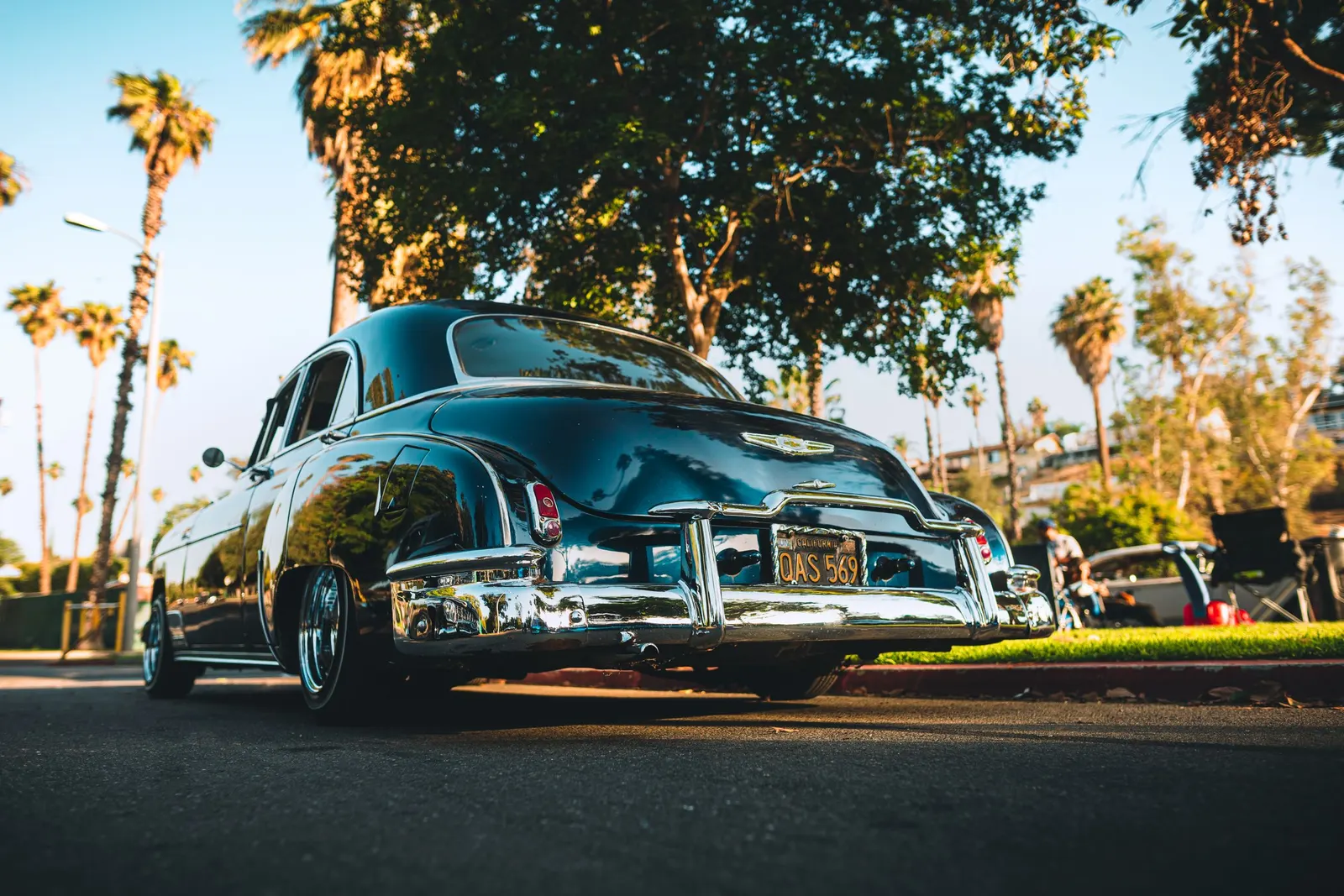
A trim clip is easy: a few lines, a hole, a hook, and a set of calipers gets you everything you need. A curved dash bezel, a vent surround or a console end cap is a different story. There is no straight edge to measure from, and guessing a compound curve by eye never fits. That is where 3D scanning car parts comes in. In our Melbourne studio we use a scan as a reference, then model a clean part over the top of it.
The important word there is reference. A scan on its own is not a printable part. It is a very detailed picture of the surface, and turning it into something that fits your car takes a few more steps.
How 3D scanning car parts actually works
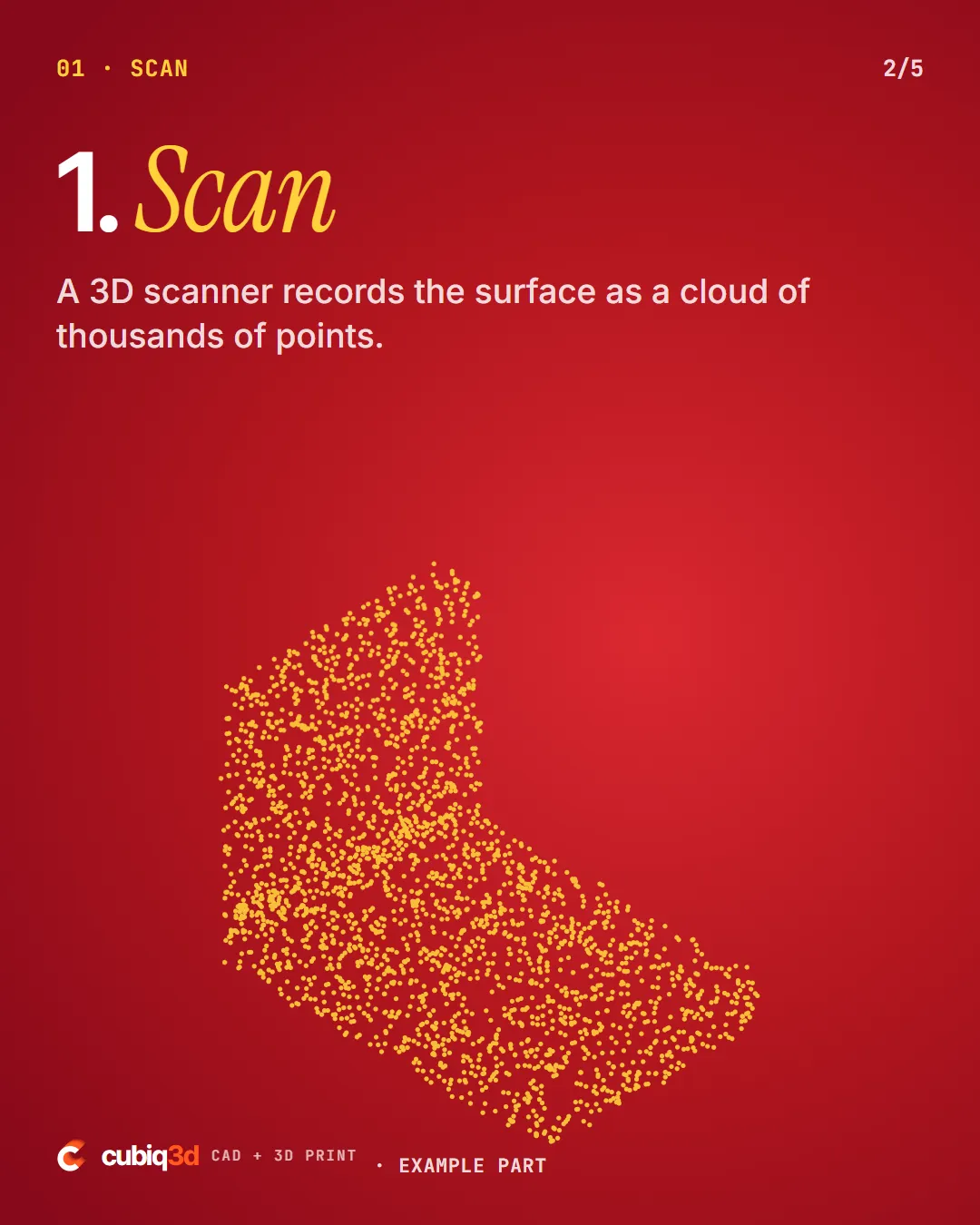
- 1ScanThe scanner records the surface of the part as thousands of points. Shiny or black plastic often needs a light coat of scanning spray so the scanner can see it.
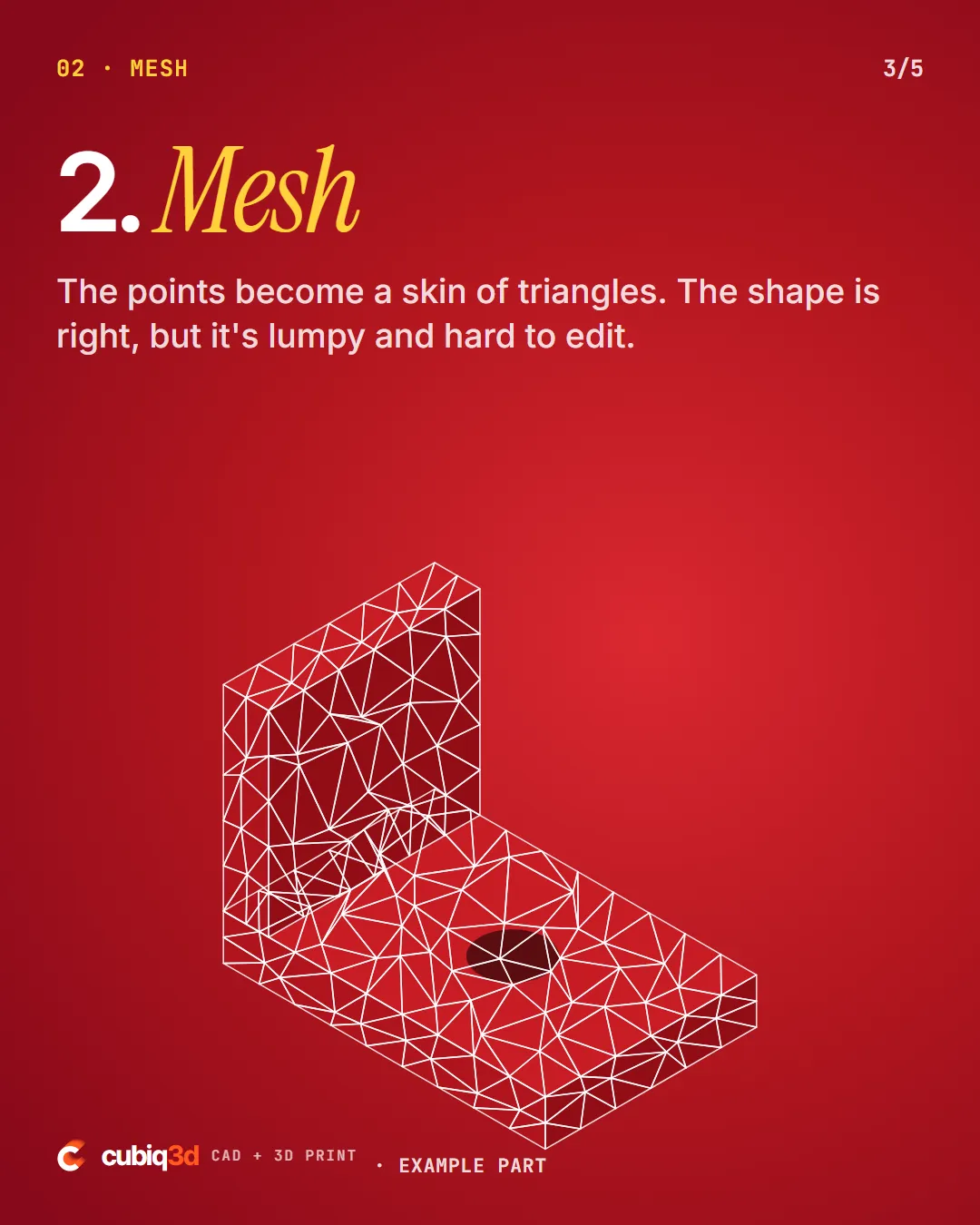
- 2MeshSoftware joins those points into a skin of triangles. The shape is right, but the surface is lumpy, the edges are soft and holes come out slightly undersized.
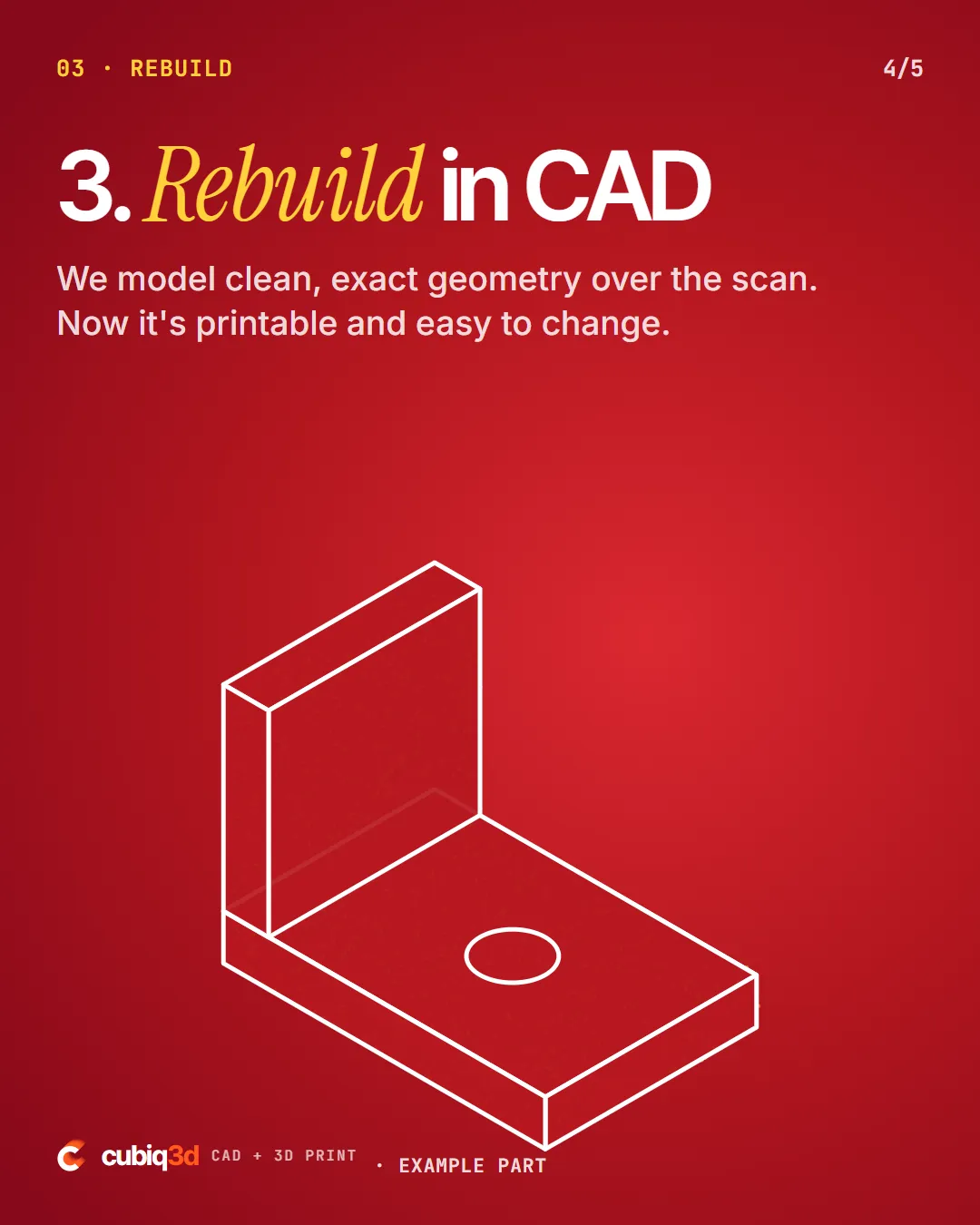
- 3Rebuild in CADWe model clean, exact geometry over the mesh: true flat faces, round holes, proper wall thickness and clip features. This is the step that makes the part printable and easy to change.
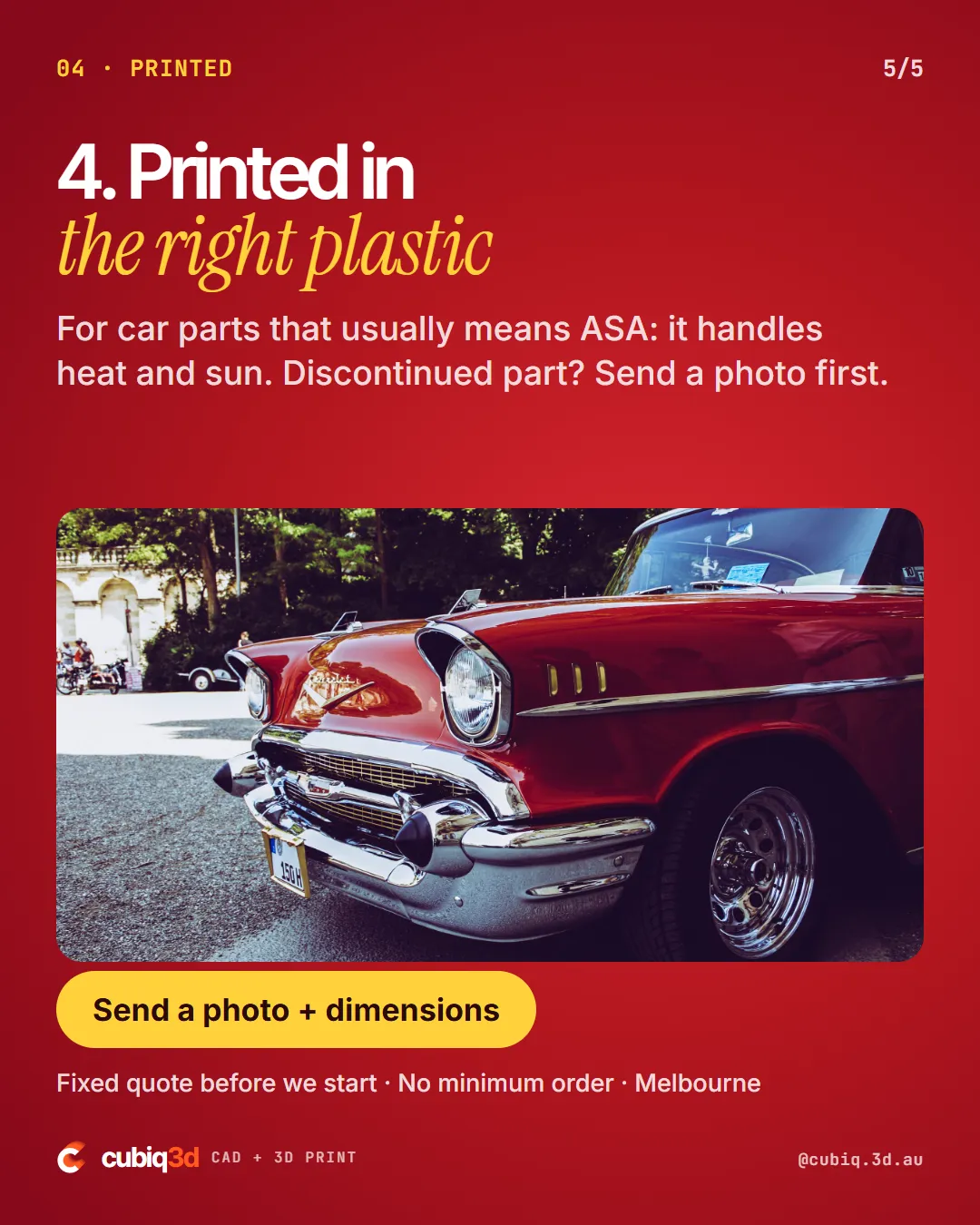
- 4PrintThe finished model goes to the printer in a plastic chosen for where the part lives in the car, then gets checked against the original.
Why not just print the scan?
People sometimes ask us to skip the CAD step and print the mesh as it is. It is tempting, but it rarely ends well. The mesh copies everything, including the crack, the warp from thirty summers in the sun and the worn edge where a screw has rubbed. It also blurs the details that matter most for fit, like the exact diameter of a locating pin or the angle of a clip hook.
| Raw scan mesh | Rebuilt CAD model | |
|---|---|---|
| Holes and pins | Slightly undersized, rough | Exact sizes you can measure |
| Damage and warping | Copied into the new part | Left out, shape restored |
| Weak spots | Same as the original | Thickened where it broke |
| Easy to change later | No | Yes, every dimension is editable |
| Good for a batch | Inconsistent | Same file, same part every time |
When a scan is worth it, and when it isn't
Quick question
What does your part look like?
A scan works best when the original part, even a broken one, is in your hands. If the part is completely gone, we can sometimes scan the matching part from the other side of the car and mirror it, or scan the panel it fits into and design the missing piece to suit.
Picking the plastic
Once the shape is right, the material decides whether it lasts. Car interiors get hot, and a dash-top part sees direct sun through the windscreen. For most interior parts we use PETG or ABS. For parts in full sun, ASA is the usual choice because it handles heat and UV; ask us about it. We go into the numbers in what happens to 3D printed car parts in a hot car, and our materials page covers the rest.
To get a scanned car part started
0/5Scanning is one tool in our CAD design work, and most of what we scan ends up as a car part that nobody sells any more.
Questions people ask
Do I need to bring the part in for a 3D scan?
Yes, a scan needs the physical part. You can drop it off at our Melbourne studio or post it. Flat parts often don't need a scan at all, just photos and measurements.
Can you scan a part that is still on the car?
Usually it's much easier with the part removed. If it can't come off, send photos first and we'll talk through options.
Will the printed part be an exact copy of the original?
It will match the fit, but it won't copy the damage. We rebuild the shape cleanly and often add material where the original cracked.