Car parts2 min read
Will a 3D Printed Car Part Survive a Hot Melbourne Summer?
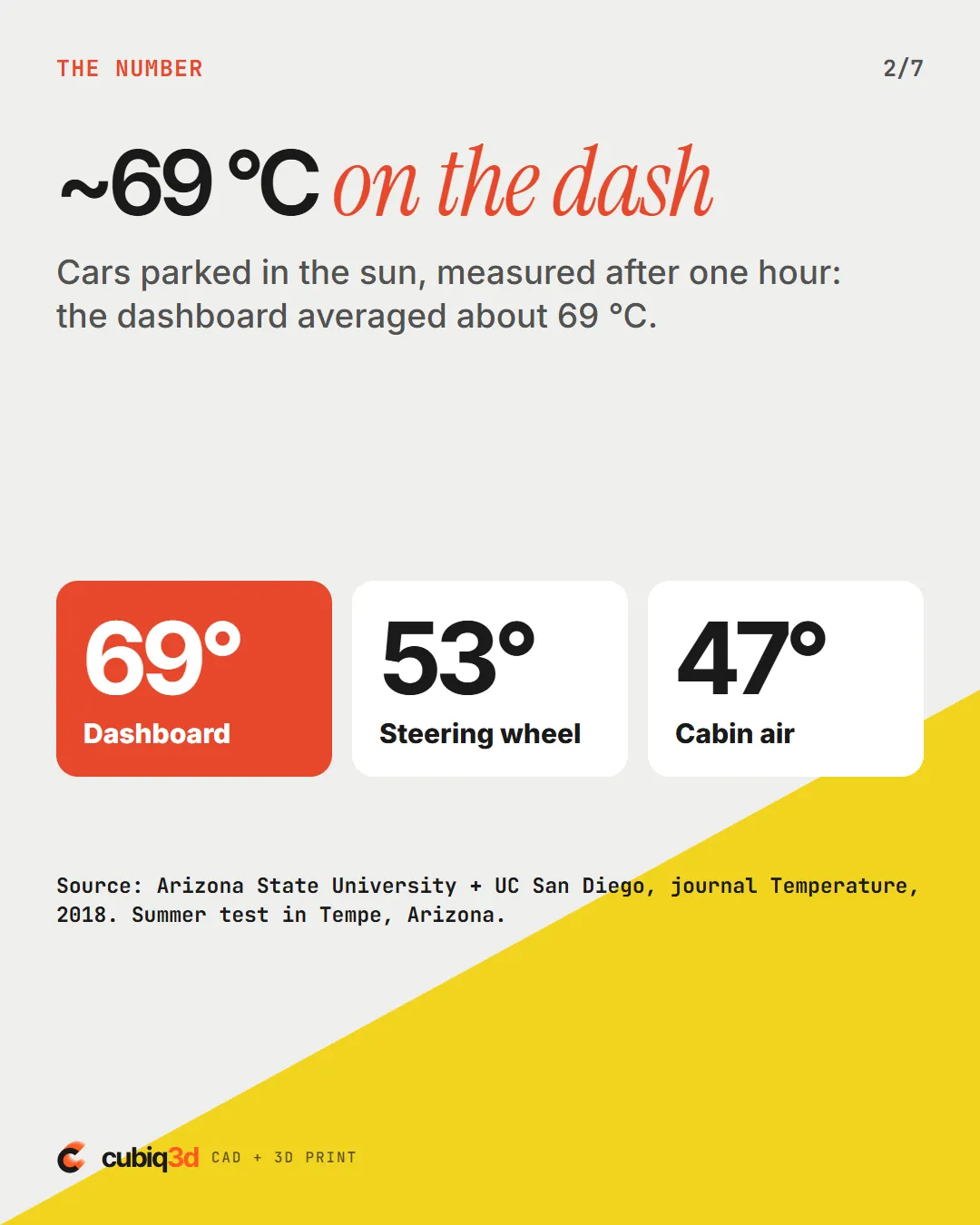
A dashboard in the sun can pass 65 °C within an hour. Here is which 3D printing plastics survive inside a hot car, which ones warp, and what we use for car parts in Melbourne.

A replacement vent tab or trim clip can look perfect on the bench and then sag into a banana after one February afternoon in a car park. The shape was fine. The plastic was wrong. Heat is the number one reason a 3D printed car part fails, so it is the first thing we ask about when someone in Melbourne sends us a car part to remake.
- Dashboard after 1 hour in the sun
- ~69 °C
- Cabin air in the same car
- ~47 °C
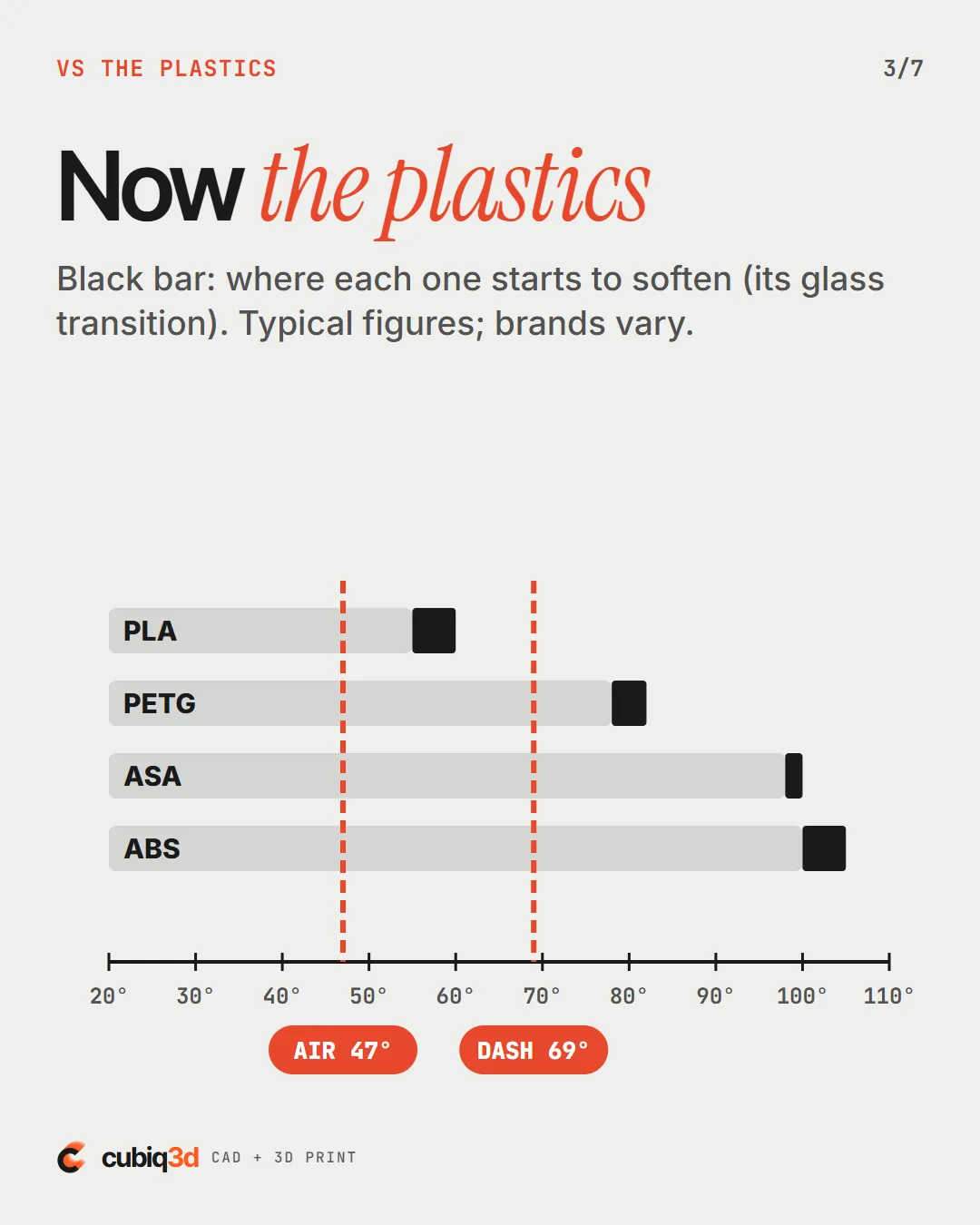
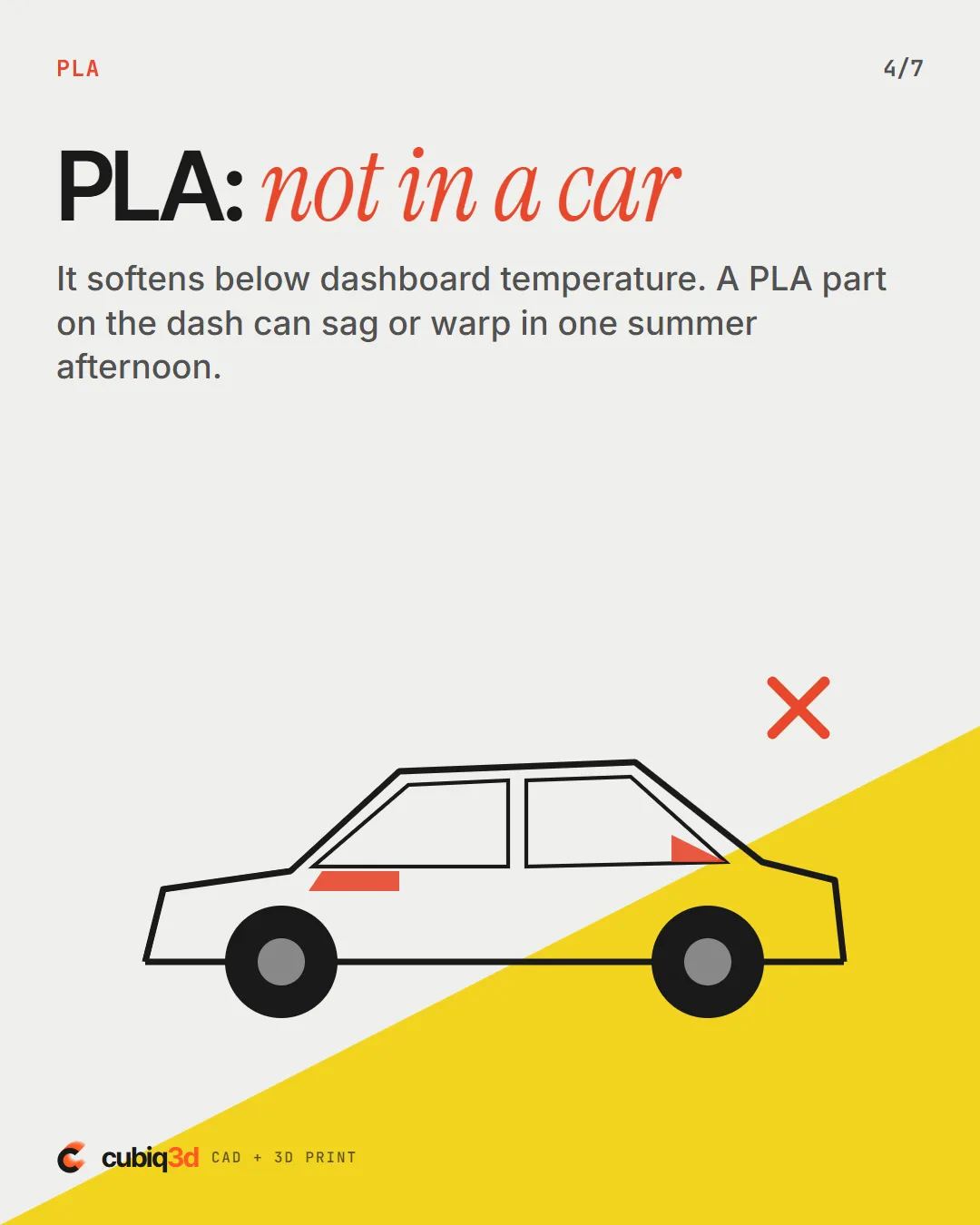
- Where PLA starts to soften
- 55–60 °C
Those first two numbers come from a 2018 study by Arizona State University and UC San Diego, published in the journal Temperature, which measured cars parked in summer sun (ASU news). Melbourne summers are milder than Arizona's, but a dark dash on a 38 °C day in Footscray or Frankston gets close enough to matter.

Why heat matters more than strength
Every plastic has a temperature where it stops being stiff and starts to creep, called the glass transition. Below it, the part holds its shape. Near it, any load (a clip pushing on a panel, a phone sitting in a mount) slowly bends the part, and it stays bent when it cools. That is why a printed part can pass every test in the garage and still fail in January.
| Plastic | Softens around | Inside the car? | On the dash or outside? |
|---|---|---|---|
| PLA | 55–60 °C | No | No |
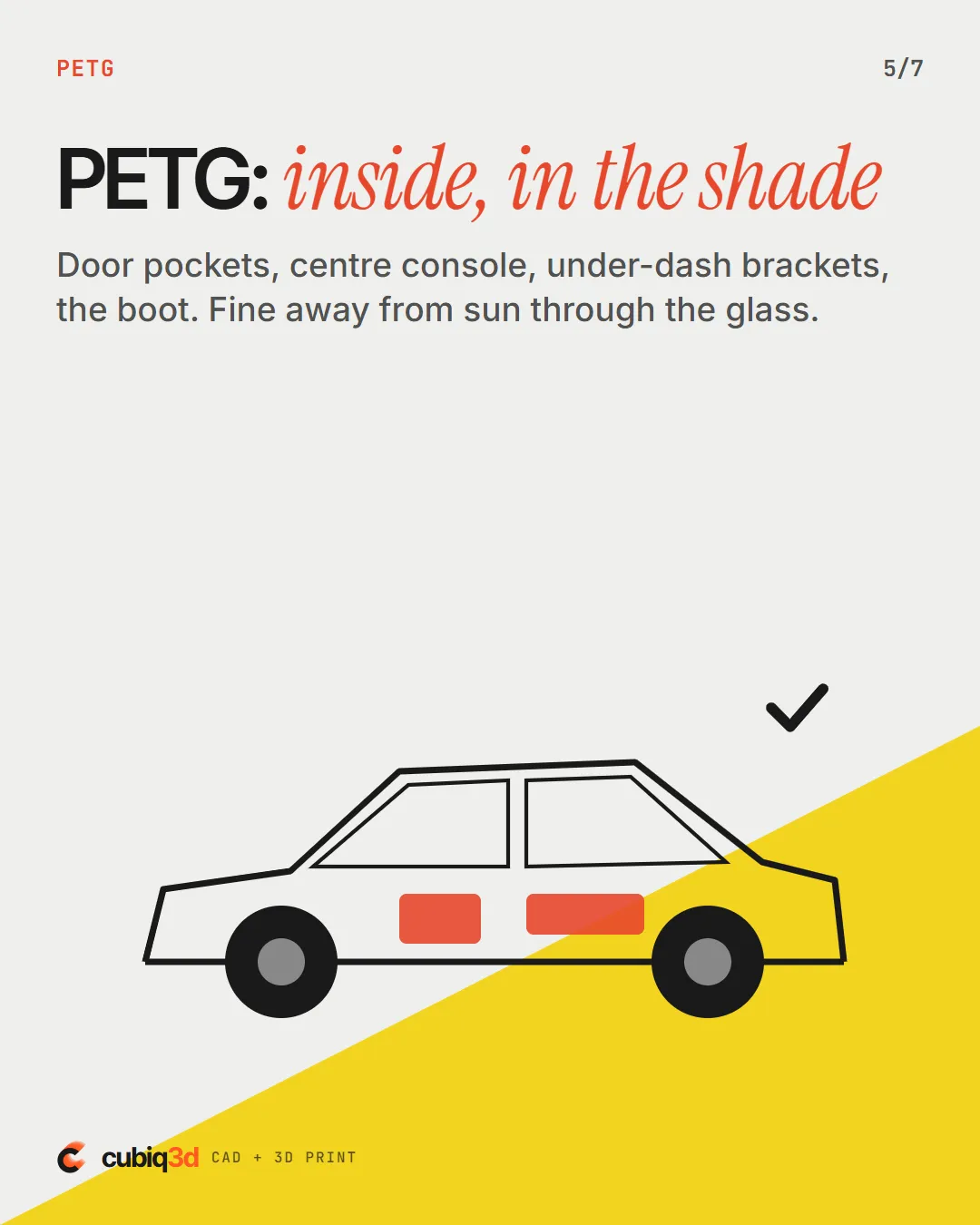
| PETG | ~80 °C | Yes, out of direct sun | Not ideal |
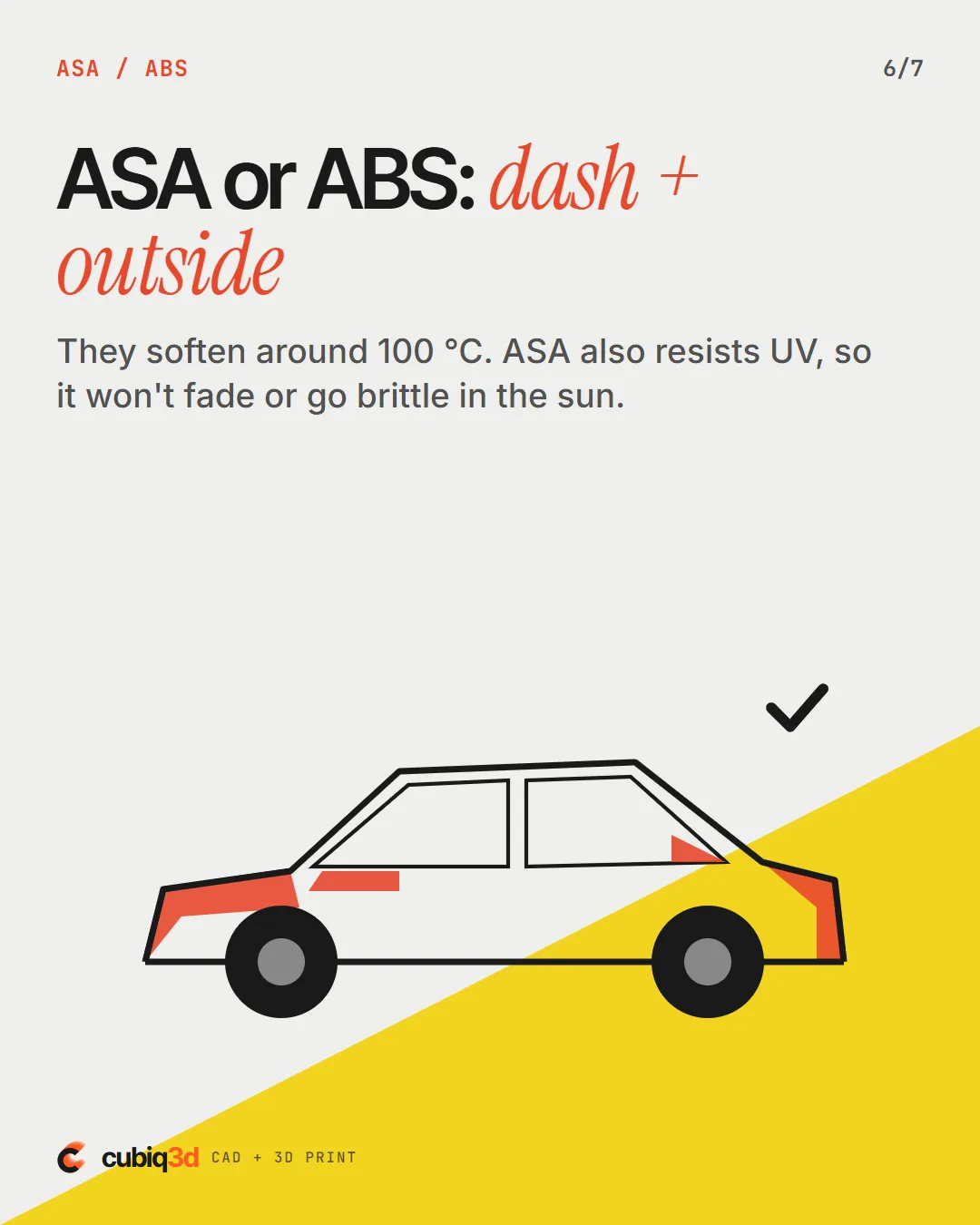
| ABS | ~100 °C | Yes | Yes, painted or shaded |
| ASA | ~100 °C | Yes | Yes, and it handles UV |
| TPU (flexible) | Stays flexible | Grommets, bumpers, seals | Short exposure only |
Where the part lives decides the plastic
Quick question
Where will your part live in the car?
How we design car parts that last
- 1Find out where it livesDash, door, console, boot or outside. That sets the plastic before we draw anything.
- 2Thicken where it brokeOld clips usually fail at the thinnest point the sun hit hardest. We add material there, not everywhere.
- 3Print in the right directionLayers are the weakest direction of a print, so we orient the part to keep clip arms and hooks along the layers, not across them.
- 4Check the fit before it shipsWe measure the print against your dimensions. For tight snap fits we can print a quick test piece first.
Before you send us a car part
0/5Want to see what that looks like for your part? Our car parts service covers clips, trim, vent tabs and discontinued parts, and the materials guide goes deeper on PETG versus ABS.
Questions people ask
Is PETG good enough for car parts?
For most interior parts out of direct sun, yes. For anything on the dash or under constant load in the heat, we use ABS.
Can you 3D print parts for the outside of a car?
Small exterior parts like covers and caps can work in ABS, which handles heat. ASA, a close cousin that also resists UV, suits parts in full sun; ask us about it. We'll tell you if a part is better made another way.
Do you print car parts in Melbourne?
Yes. We are a Melbourne studio. Parts can be picked up or posted.