Guides3 min read
How Strong Are 3D Printed Parts? The Myth That Prints Are Weak
How strong are 3D printed parts? Strength comes from the plastic, walls, infill and layer direction. What decides it, from our Melbourne 3D printing studio.
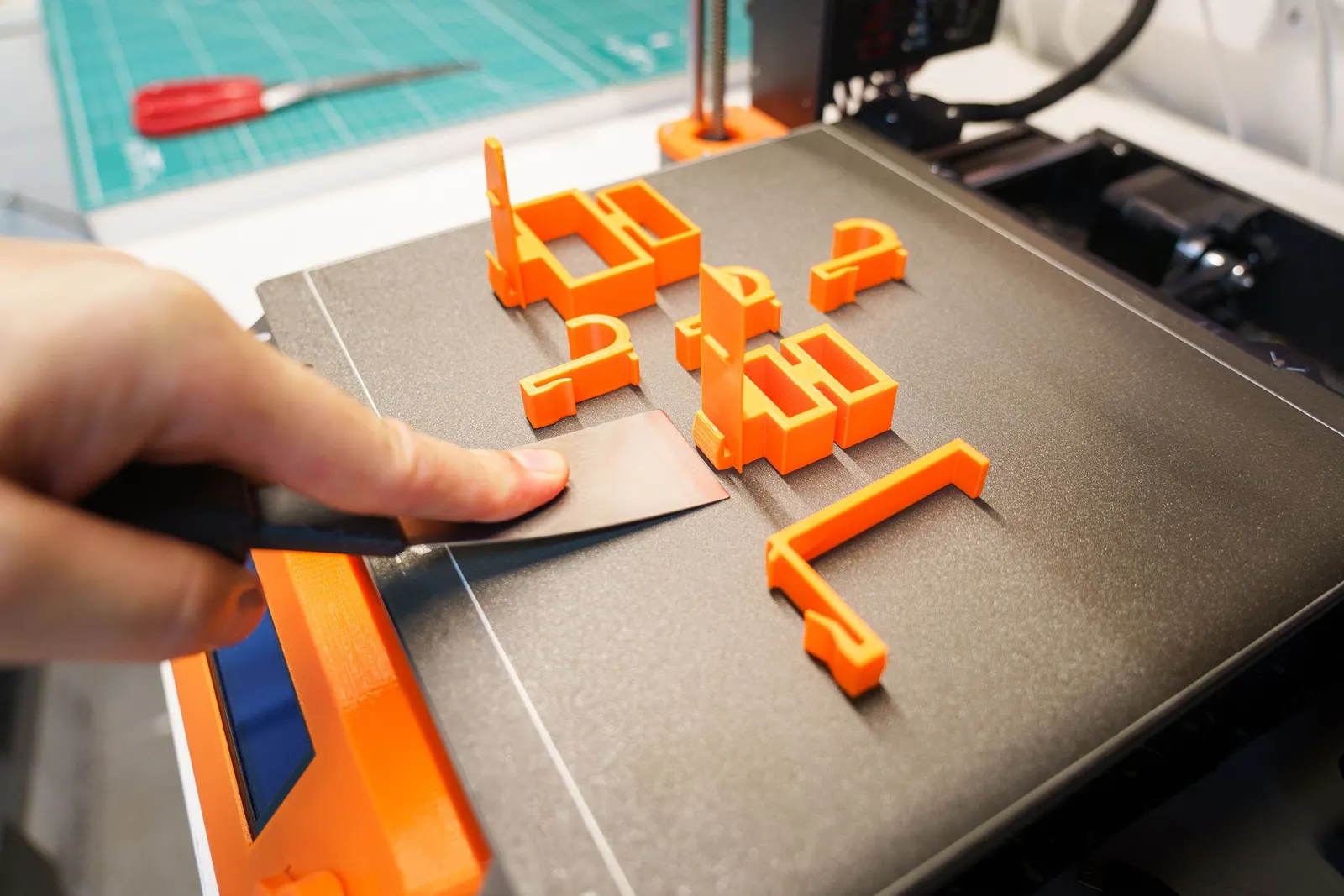
Plenty of people have held a 3D print that snapped the first time it was used, and decided the whole process makes weak parts. It is a fair conclusion from a bad print, but the wrong one in general. So how strong are 3D printed parts? Strong enough for brackets, clips, jigs, mounts and car interior parts, when they are designed and set up for the job. Strength is not luck. It is a set of choices, and we make them deliberately for every part that leaves our Melbourne studio.
How strong are 3D printed parts? Four things decide it
- 1The plasticPLA is stiff but brittle and softens in heat. PETG is tougher and bends a little before it breaks. ABS handles heat. TPU flexes instead of snapping. Pick the wrong one and no setting will save the part.
- 2The wallsThe outer shell carries most of the load, a bit like a tube. Adding walls usually helps strength more than adding infill.
- 3The infillA print is not solid inside. The lattice inside can be light for a cover or dense for a bracket that takes load, and its pattern changes how load spreads.
- 4Which way the layers runA print is strongest along its layers and weakest between them. Orienting the part so the load runs along the layers is often the biggest single gain.
Why some prints really are weak
Weak prints usually come from one of a few mistakes, and none of them is built into the process itself:
- Default settings. Two thin walls and sparse infill are fine for a figurine, not for a shelf bracket.
- Wrong orientation. A clip arm printed so its layers stack across the bend will peel apart at the first flex.
- Wrong plastic. PLA in a hot car, or a rigid plastic where a flexible one was needed.
- A shape copied from a moulded part. Injection-moulded designs rely on very thin ribs that suit moulding. A printed version often needs thicker sections and generous fillets at sharp corners, where stress concentrates.
- Poor layer bonding. Printing too cold or too fast leaves layers that never fused properly.
How the common plastics compare
| Plastic | Stiffness | Toughness | Heat | Good for |
|---|---|---|---|---|
| PLA | High | Low, can snap | Softens around 55–60 °C | Prototypes, models, indoor parts |
| PETG | Medium | Good, bends before breaking | Around 80 °C | Brackets, clips, wet places |
| ABS | Medium | Good | Around 100 °C | Car interiors, housings |
| TPU | Low (flexible) | Very high | Stays flexible | Feet, bumpers, seals |
| Resin (standard) | High | Low, brittle | Varies by resin | Fine detail, small parts |
| Nylon / carbon blends (ask us) | Medium to very high | High | Generally higher | Wear parts, stiff light parts |
Those temperatures are approximate softening points, not ratings, and they vary between brands. Heat is the most common reason a good print fails in Australia, which we cover in detail in our hot car guide.
Is a 3D printed part as strong as a moulded one?
Usually not quite, in the same plastic and the same shape, because a moulded part is uniform all the way through while a print is built from bonded layers. But a print does not have to be the same shape. We can thicken the section that broke, add a fillet where stress concentrated, or switch to a tougher plastic. A redesigned printed part often outlasts the moulded original, because the original failed at a weak point that we can now fix.
What does your part have to do?
Quick question
What will your part mostly face?
We set plastic, walls, infill and orientation per job as part of our 3D printing service, and our materials guide goes deeper on each plastic.
Questions people ask
Are 3D printed parts strong enough for real use?
Yes, for many functional parts: brackets, clips, mounts, jigs and housings. The plastic, wall count, infill and print orientation all have to suit the load.
What is the strongest 3D printing plastic?
It depends what strong means. PLA is stiff but brittle, PETG and ABS are tougher, TPU barely breaks because it flexes, and carbon-filled blends are very stiff for their weight.
Is 100% infill the strongest?
Not always the best choice. More walls usually add more strength for less time and weight than solid infill, and orientation often matters more than either.
Why did my 3D print break along a layer line?
Layers are the weakest direction of a print. If the load pulled the layers apart, the part was oriented the wrong way for that load, or the layers did not fuse well.