Car parts3 min read
The Best Plastic for 3D Printed Car Parts: PLA, PETG, ABS or ASA?
Heat is only half of it. Here is the best plastic for 3D printed car parts once you weigh toughness, sun, cold and finish, from our Melbourne studio.
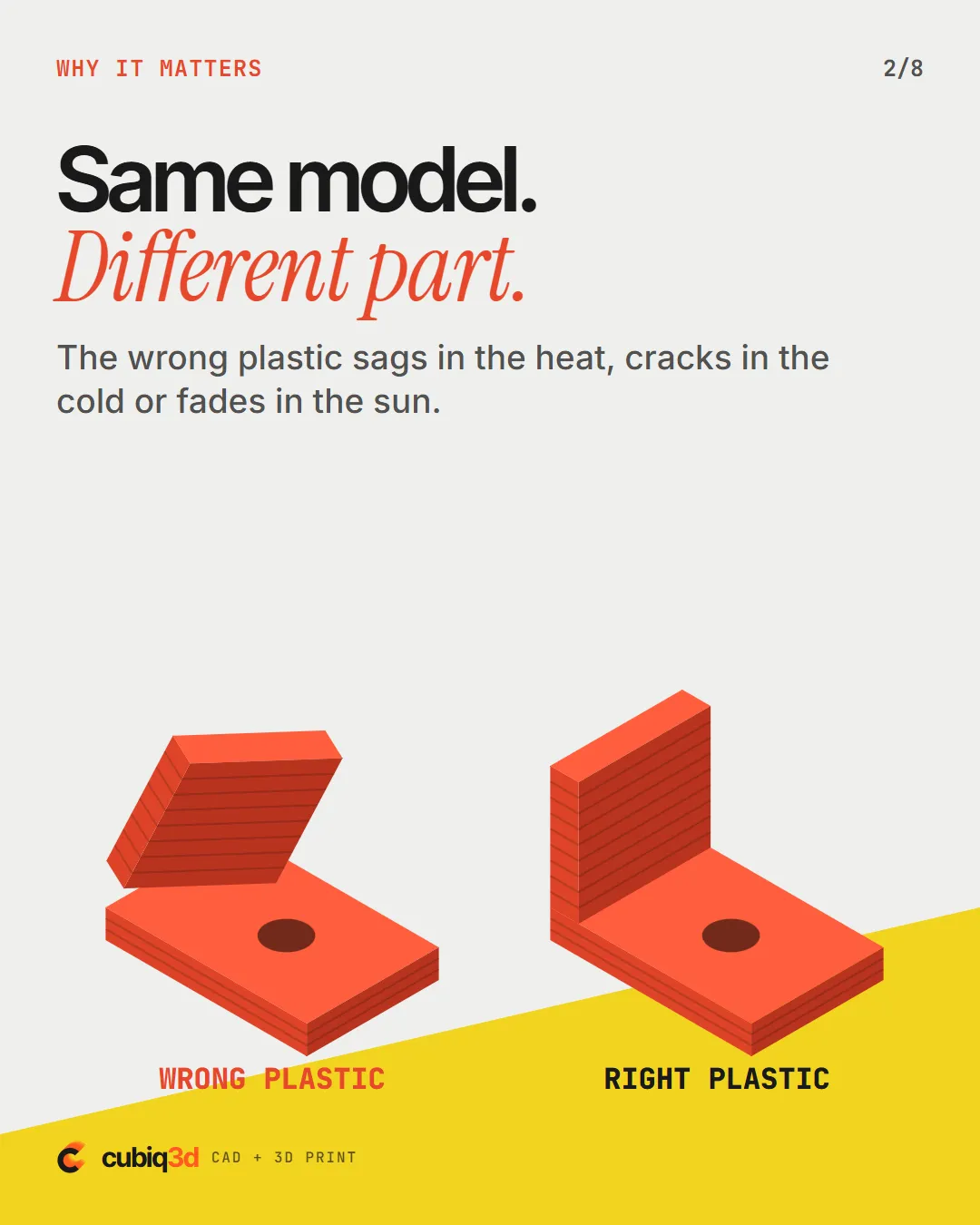
Two prints can come off the same file and behave like completely different parts. One sags on the dash, one cracks on a frosty morning, one fades to chalk after a summer outside. The model was the same every time. The plastic was not. So when someone asks us about the best plastic for 3D printed car parts, our answer always starts with a question back: where does it live, and what does it have to do?
We have already covered the heat side in detail in what happens to 3D printed car parts in a hot car. This post looks at everything else that decides whether a car part survives a Melbourne year: toughness, sun, cold, flex and finish.
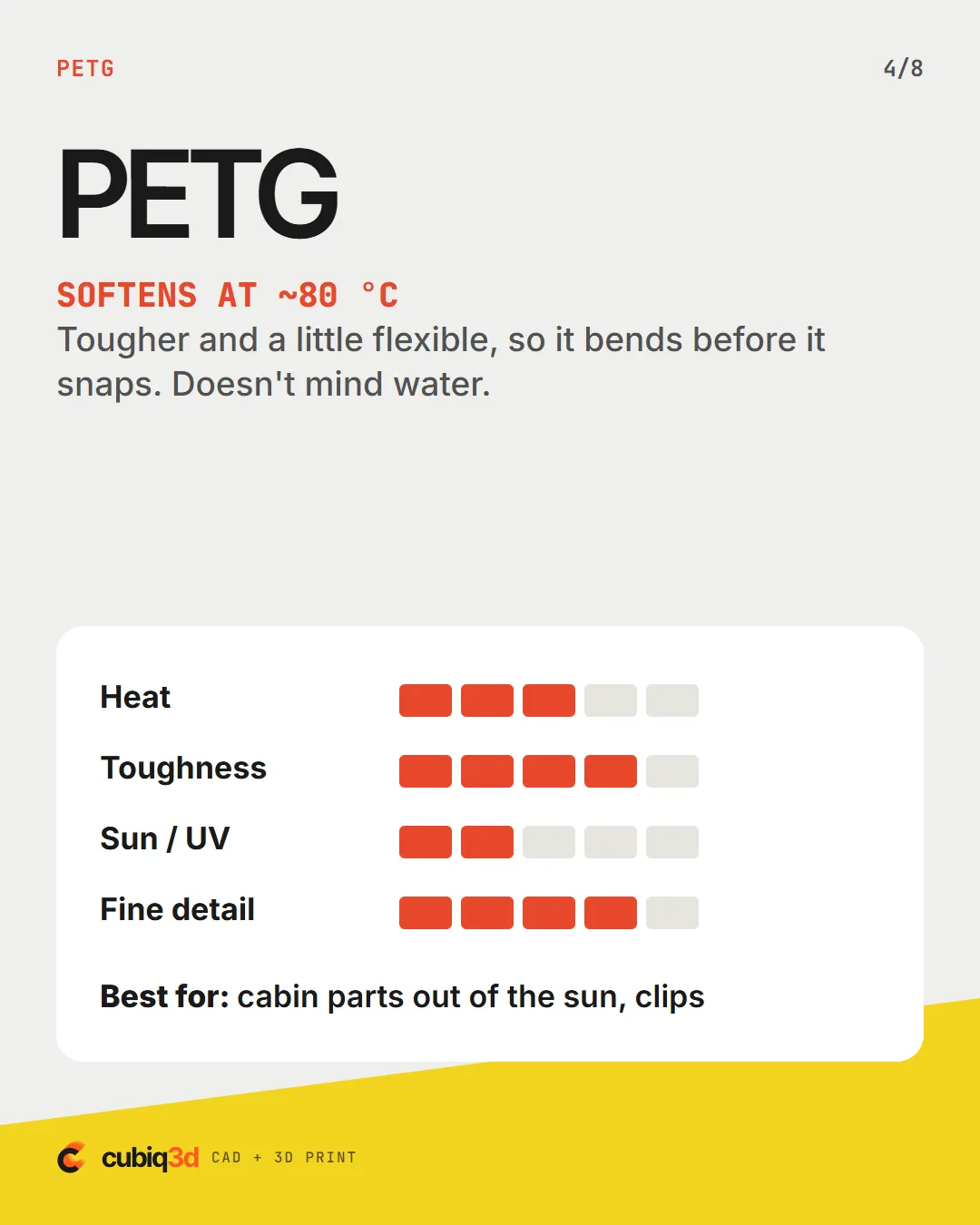
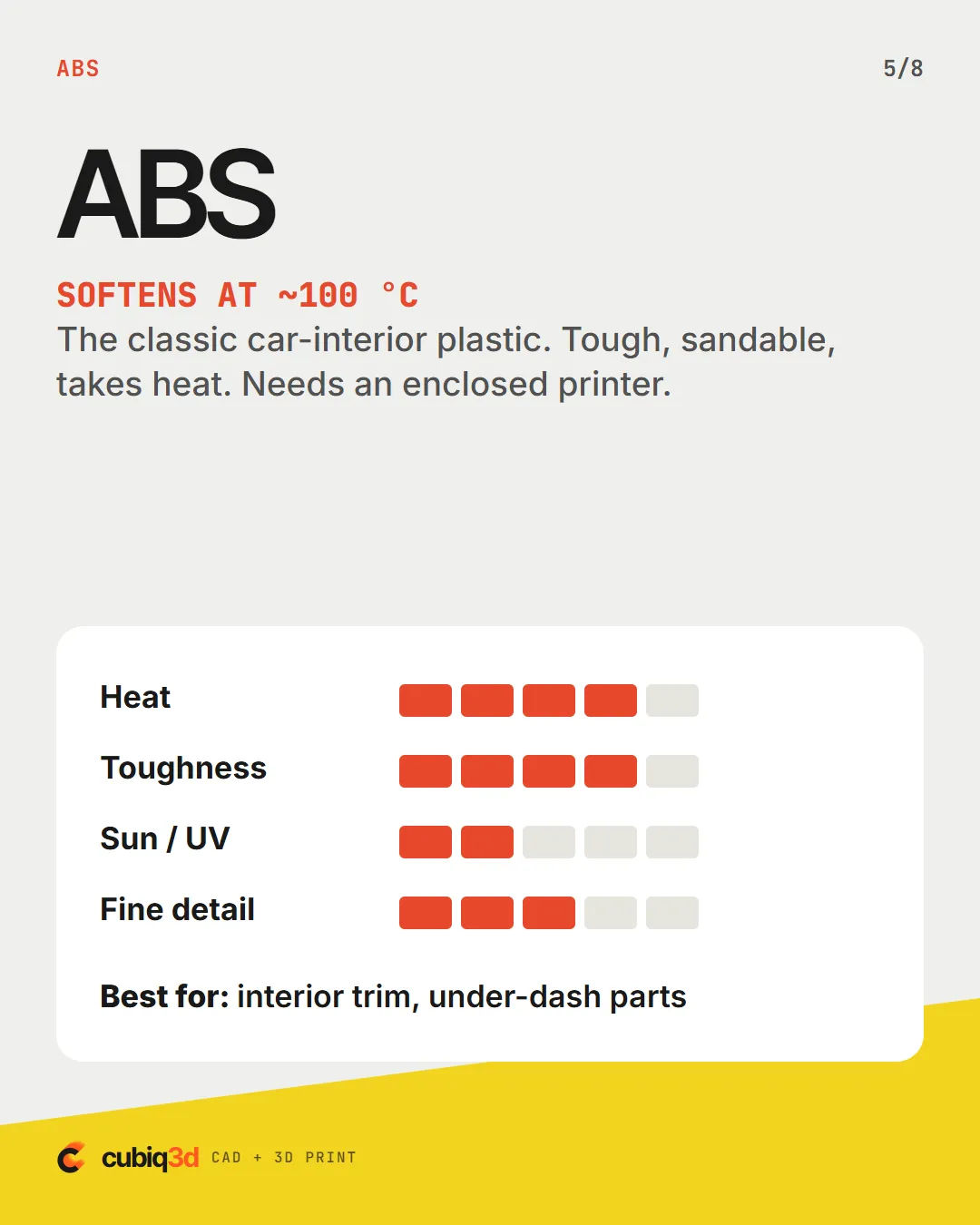
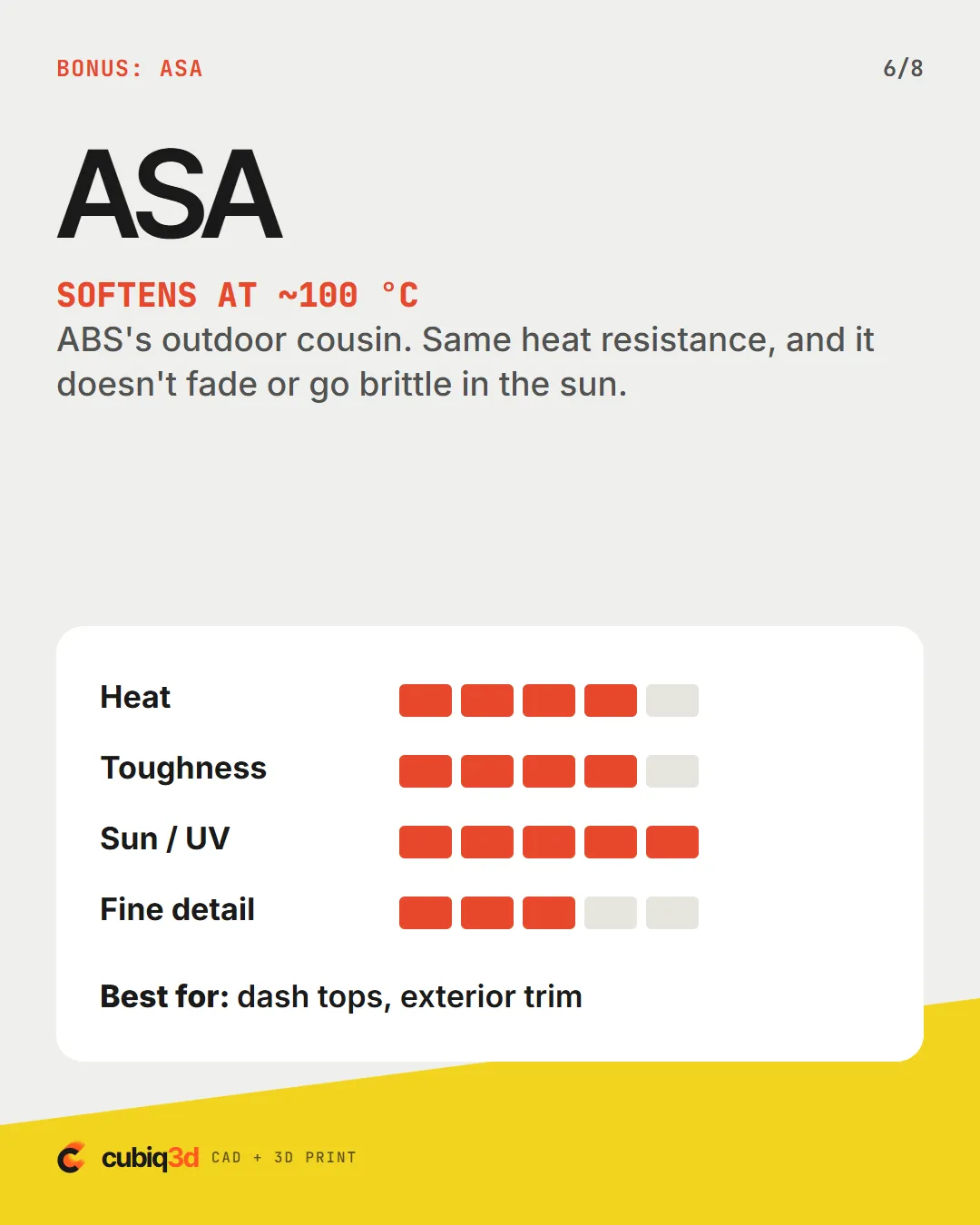
The best plastic for 3D printed car parts depends on more than heat
| Plastic | Toughness | Sun and UV | Cold mornings | Finish |
|---|---|---|---|---|
| PLA | Stiff but brittle | Fades and weakens | Can crack | Crisp detail |
| PETG | Tough, bends before it snaps | Fair, out of direct sun | Good | Slightly glossy |
| ABS | Tough, sandable | Fades in full sun unless painted | Good | Sands and paints well |
| ASA | Like ABS | Built for UV | Good | Matte, sands and paints |
| TPU | Flexible, rubbery | Fair | Stays flexible | Soft, not for show faces |
Toughness: will it bend or snap?
A clip gets bent every time a panel goes on or comes off. A plastic that is stiff but brittle, like PLA, holds its shape well until the moment it snaps. PETG and ABS give a little first, which is exactly what you want in a clip arm or a hook. That is why PETG is our default for most clips that sit out of the sun.
Sun: what happens after a summer outside
Ultraviolet light breaks down many plastics over time. The surface fades, then goes chalky, then brittle. ABS is fine inside the car or under paint, but bare ABS in full sun will fade. ASA was developed as a weather-resistant cousin of ABS, so it is the usual pick for exterior covers, mirror caps and anything that sits on top of the dash. ASA is one we talk through case by case; ask us about it.
Cold: the frosty Melbourne morning
Old clips often fail on a cold morning, not a hot afternoon. Years of heat cycles make plastic tired and brittle, and cold makes it stiffer still. A fresh print in a tough plastic has neither problem, which is one reason a good reprint can outlast the original.
Flex: when the part should squash
Some parts are meant to give: grommets, bump stops for a glovebox lid, anti-rattle pads, cable boots. Those get TPU, a flexible plastic that feels closer to rubber. It's not for anything that needs to hold a shape under load.
Finish: does it have to match?
Printed parts show fine layer lines. For a hidden bracket that does not matter. For a visible trim piece, ABS and ASA can be sanded and painted to suit, and textured surfaces hide lines well. If matching an exact factory grain matters to you, tell us up front so we can plan for it.
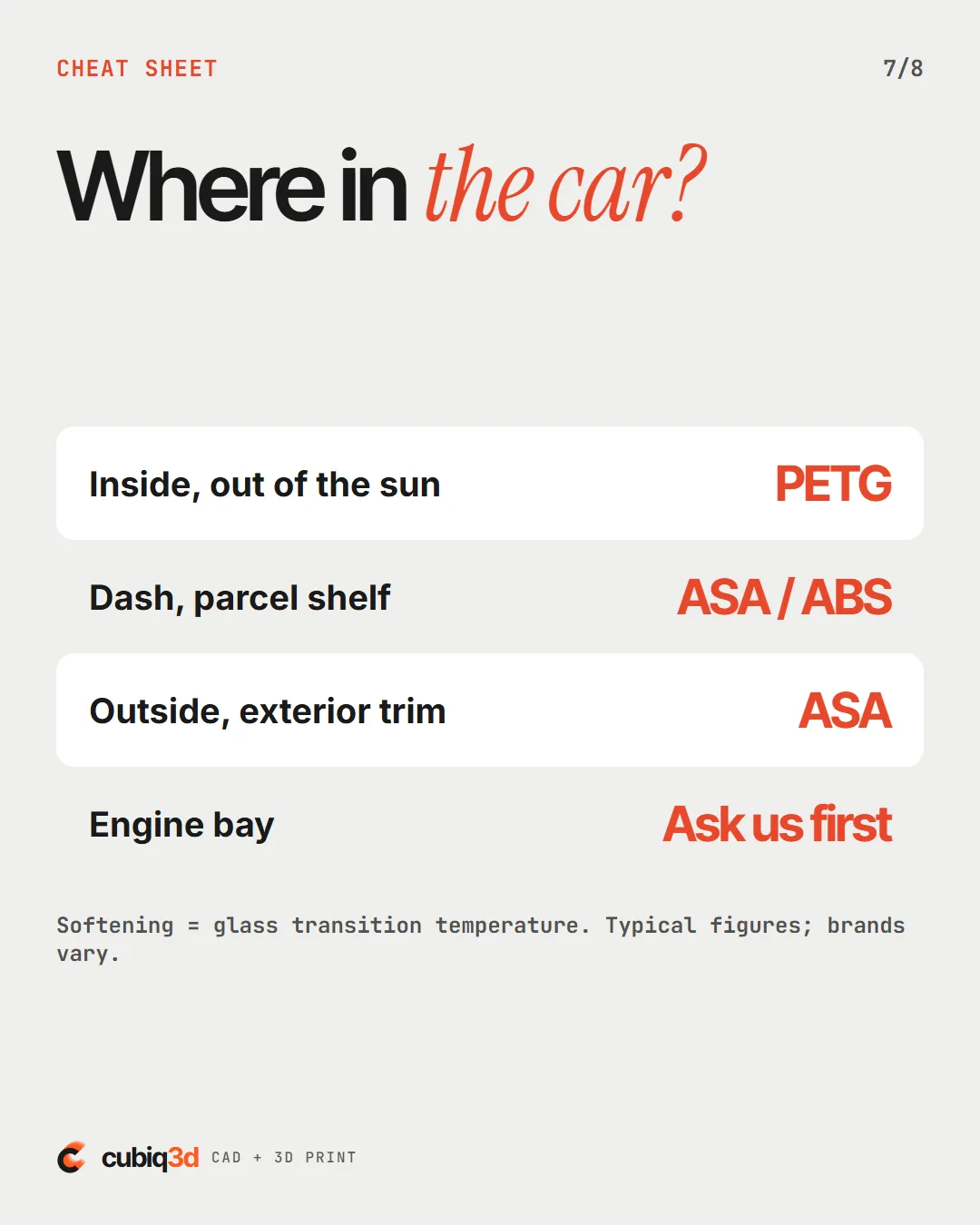
Quick picks by job
Quick question
What is the part's main job?
The full rundown of what we print, with strengths and weak spots for each, is on our materials page. For car-specific jobs, see 3D printed car parts.
Questions people ask
Is PLA ever OK for a car part?
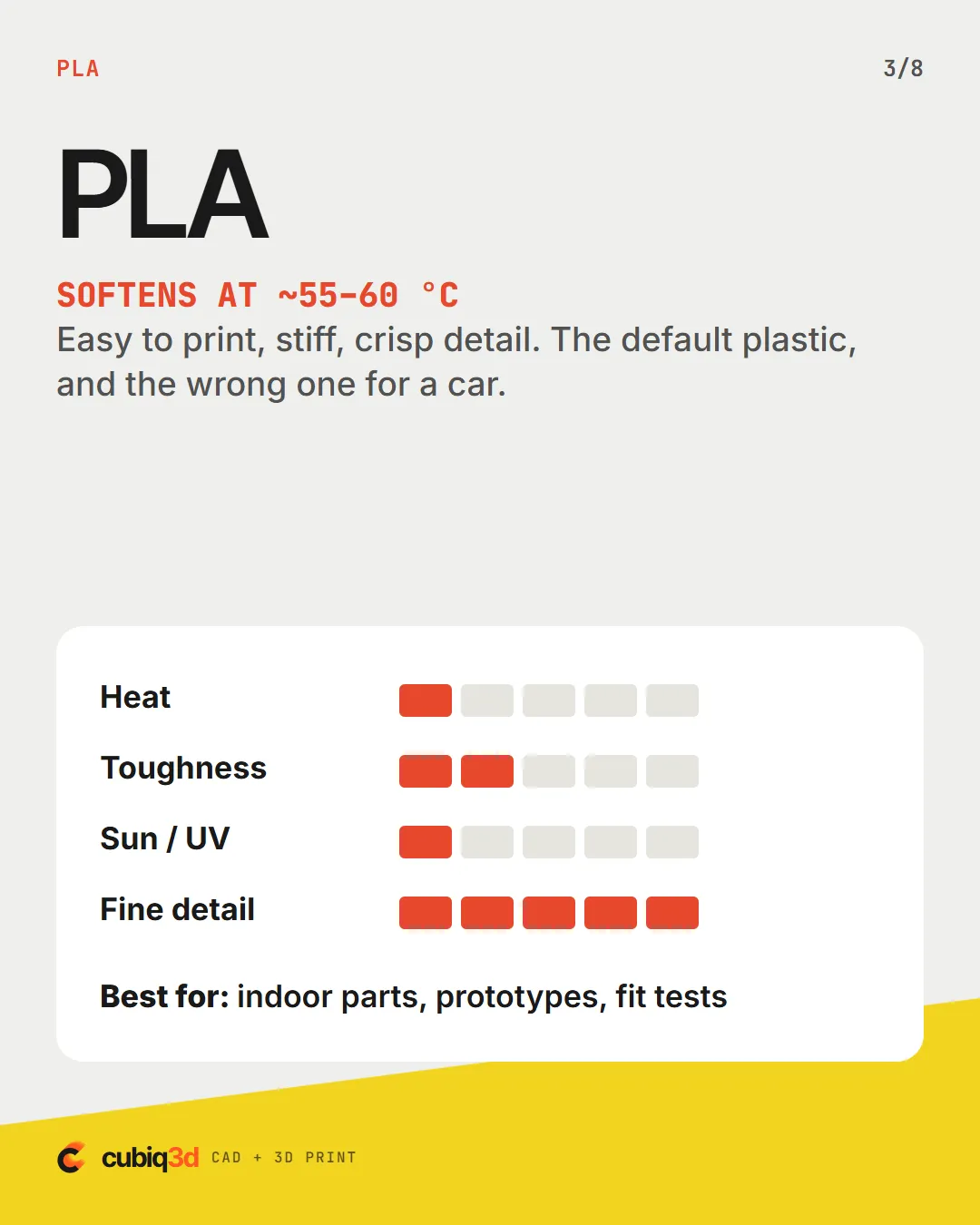
Only for test fits or parts that never stay in the car. PLA softens at a low temperature and gets brittle, so it is the most common reason a printed car part fails.
What is the difference between ABS and ASA?
They behave similarly for heat and toughness. ASA is formulated to resist UV, so it holds up better in direct sun. ASA is one we discuss case by case.
Can printed car parts be painted?
Yes. ABS and ASA sand and paint well. We can leave a part ready for your own paint or talk through finishing options.