Students3 min read
3D Printing for University Students in Melbourne
A plain guide to 3D printing for university students in Melbourne: what to send, which plastic to choose and how we print parts from your CAD file or sketch.
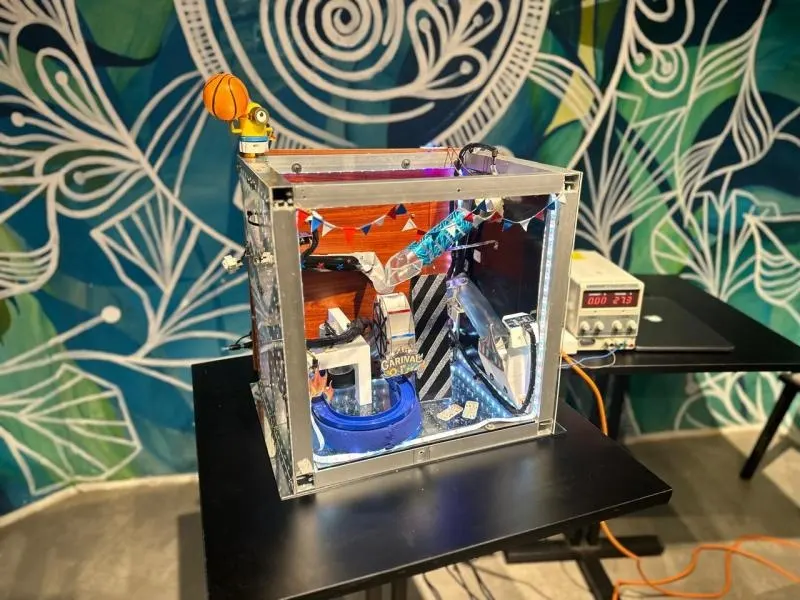
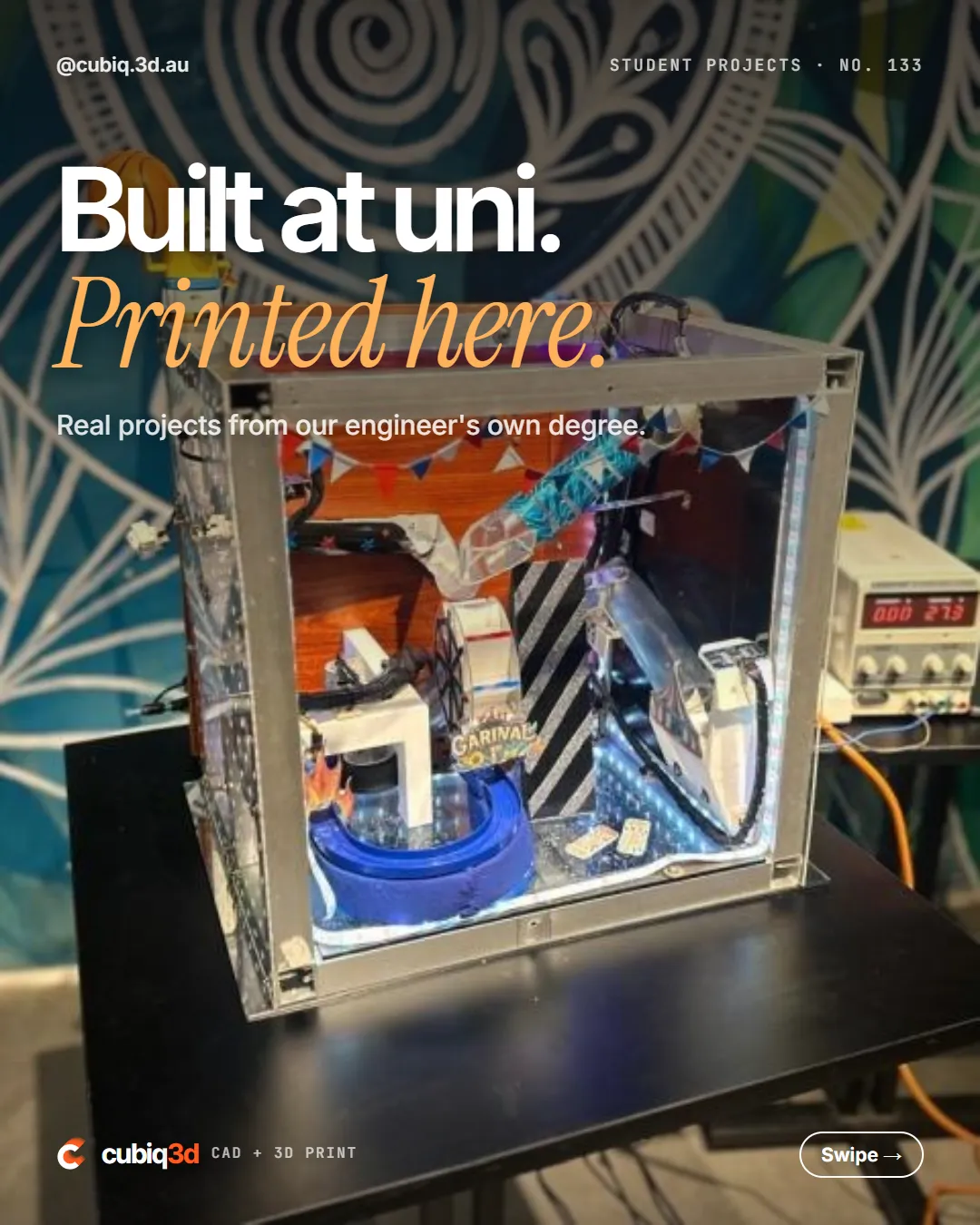
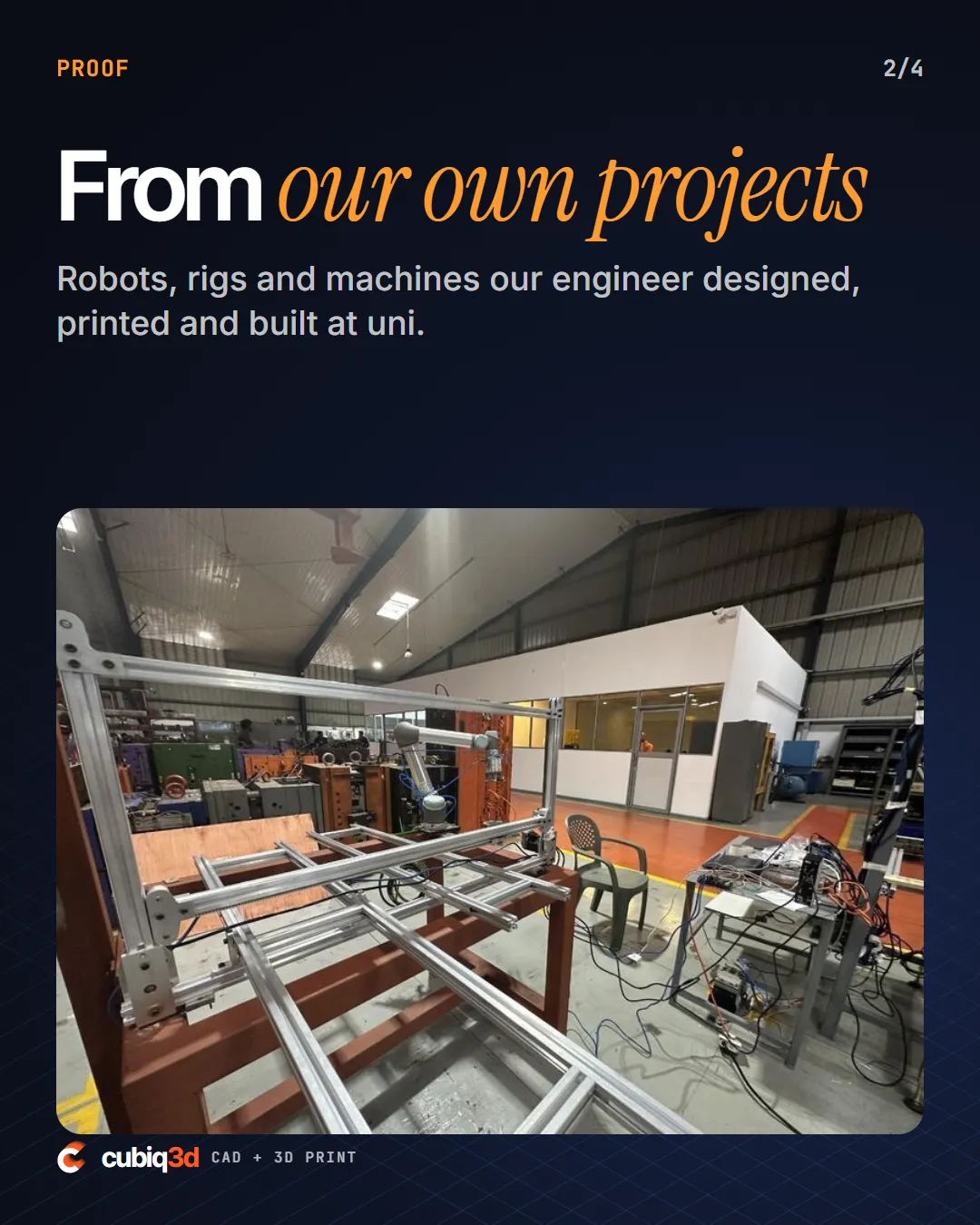
Most uni projects hit the same wall. The code works, the circuit works, and then the whole thing needs a body: a bracket, a housing, a mount that holds a sensor at exactly the right angle. That is where 3D printing for university students earns its place, and it is a big part of what we do at our Melbourne studio. Our engineer built robots, rigs and machines through their own degree, so we know what a demo day deadline feels like.
What 3D printing for university students looks like
Whether you are at Monash, the University of Melbourne, RMIT, Swinburne or Deakin, the parts students need tend to fall into a few groups. Most of them are one-offs or a handful of copies, which is exactly where printing beats machining or moulding.
- Final-year and capstone parts: brackets, housings and mechanisms that have to fit a design you already built in CAD
- Robotics: chassis plates, motor mounts, sensor brackets, wheel hubs and grippers
- Electronics enclosures: boxes with cut-outs for your board, screen, ports and cables
- Test rigs and fixtures: parts that hold a sample, a sensor or a camera still while you take measurements
- Models and display pieces for presentations and expos
What to send us
Before you ask for a quote
0/5If you have no CAD yet, that is fine. Our CAD design service can turn a sketch into a model, or tidy up a model you started. Check your course rules first about how much outside help is allowed on assessed work. Many students keep the design work as their own and use us only for printing and printability checks.
Which plastic suits a student project?
| Material | Good for | Watch out for |
|---|---|---|
| PLA | Fit checks, models, display pieces, indoor brackets | Softens in heat, so not for hot cars, motors or sunny windows |
| PETG | Tougher brackets, enclosures, parts that take knocks | Slightly less crisp detail than PLA |
| ABS | Parts near motors or electronics that get warm | Needs good design for large flat parts |
| TPU | Gripper fingers, bumpers, feet, cable grommets | Flexible by design, so not for stiff structure |
| Resin | Small, highly detailed parts and models | More brittle than the plastics above |
Nylon, ASA and carbon-fibre blends can suit some engineering parts. Ask us and we will tell you whether your part actually needs them.
How a student job usually runs
- 1Send the file and the dateCAD or sketch, the material if you know it, and the deadline. The date shapes everything else.
- 2We check printabilityWall thickness, overhangs, hole sizes and fits. If something will not print well, we say so before anything starts.
- 3Fixed quoteOne price before we print. No surprises the week of your demo.
- 4Test pieces for the tight bitsBearing seats, press fits and snap clips can be tested with a small print first, so the full part fits the first time.
- 5Print, check and hand overWe check the part against your key dimensions. Pick up in Melbourne or have it posted.
Our prototyping page explains how we handle early versions in general, and our studio page shows who we are and how we work.
Questions people ask
Do you print for students who are not engineering students?
Yes. Design, architecture, science and arts students send us models, display pieces and lab parts too. If it can be modelled, we can usually print it.
What file format should I send?
STEP is best for engineering parts because it keeps exact dimensions. STL is fine for most prints. If you only have a sketch, send it with measurements in millimetres.
Can you help with my CAD model?
Yes. We can model from a sketch or fix an existing model for printing. Check your course rules on outside help for assessed work first.
Do I need to be in Melbourne?
We are a Melbourne studio and parts can be picked up or posted, so students elsewhere in Victoria and Australia can send files too.